The Terminal Matrix

Four strategic terminals spanning the globe — the physical foundation of every shipment we move, from tank to tanker to final delivery.

4
Terminals
10.0M m³
Combined Storage
3
Continents
100%
Operational
Global Network

Built Where The Cargo Actually Moves

Every terminal in our network solves a different problem — feedstock intake, export throughput, rapid bunkering, or cross-continent distribution. Together, they turn four ports on three continents into a single, continuous route for the world's crude.

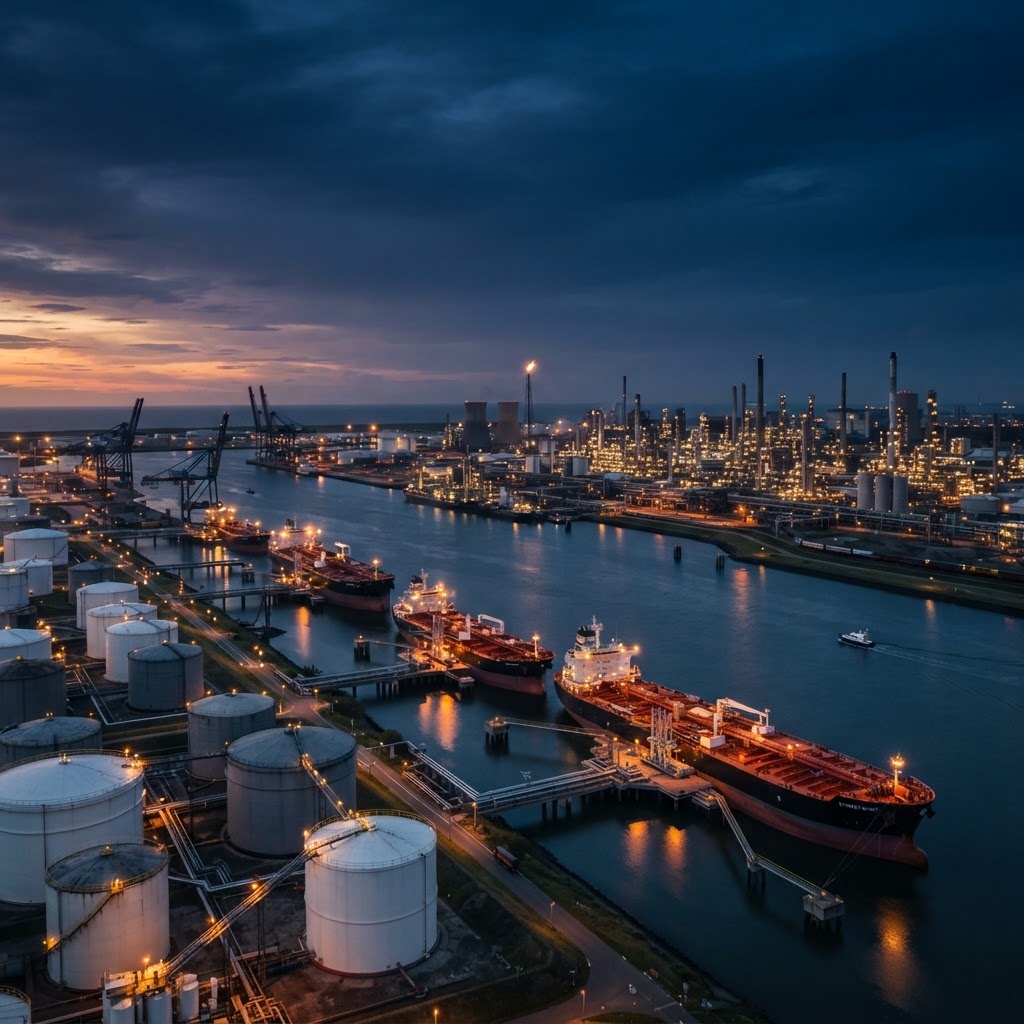
Port of Rotterdam oil terminal at blue hour
Netherlands · 51.92°N 4.47°E

Rotterdam

Hub · Storage

Europe's largest energy gateway, and the northern anchor of our network. Deep-water access from the North Sea lets us bring Suezmax and VLCC tonnage straight into the Rotterdam-Rijnmond port complex, where our tank farm sits inside the ARA cluster — Europe's densest concentration of refining capacity. From here, crude and refined product move on by pipeline into Germany and the Rhine corridor, or hold in long-term storage until the market calls for it. Rotterdam is where Atlantic Basin flows meet inland Europe, and it's the terminal we lean on hardest for flexibility.

Storage Capacity3.2M m³
Berthing Depth22.5 m
MandateRefinery feedstock
StatusOperational
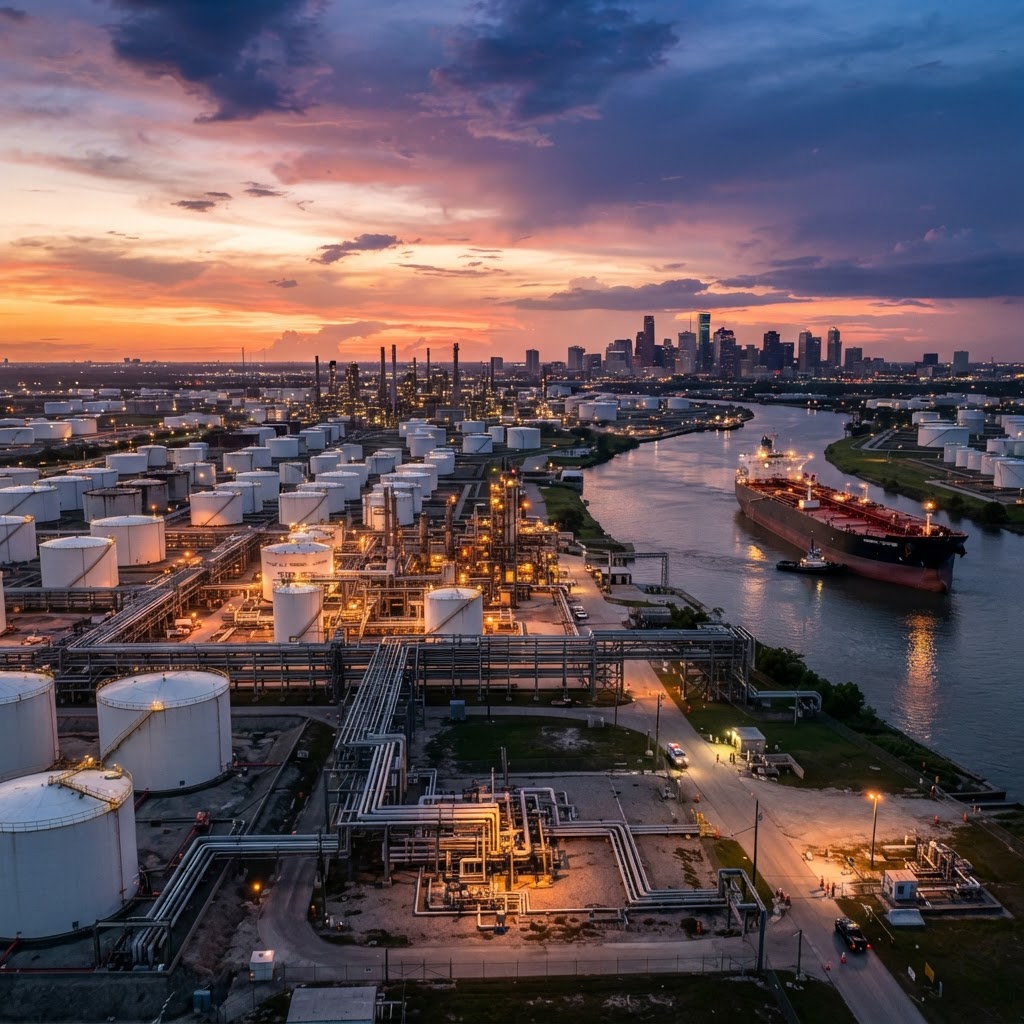
Houston Gulf Coast oil terminal at dusk
USA · 29.76°N 95.37°W

Houston

Gulf Coast

The engine room of US crude exports, and our fastest-growing terminal. Pipeline links running from the Permian and Eagle Ford basins feed straight into our tank farm, cutting out the trucking and rail transfers that slow down slower operators. Houston Ship Channel access puts us within a single tide of the Gulf, and our berths are built for high-throughput loading — Aframax and Suezmax tonnage in, laden and gone, on schedule. As US shale keeps finding new buyers across Asia and Europe, Houston is doing the heaviest lifting to get it there.

Storage Capacity2.8M m³
Berthing Depth14.6 m
MandateUS crude export
StatusOperational
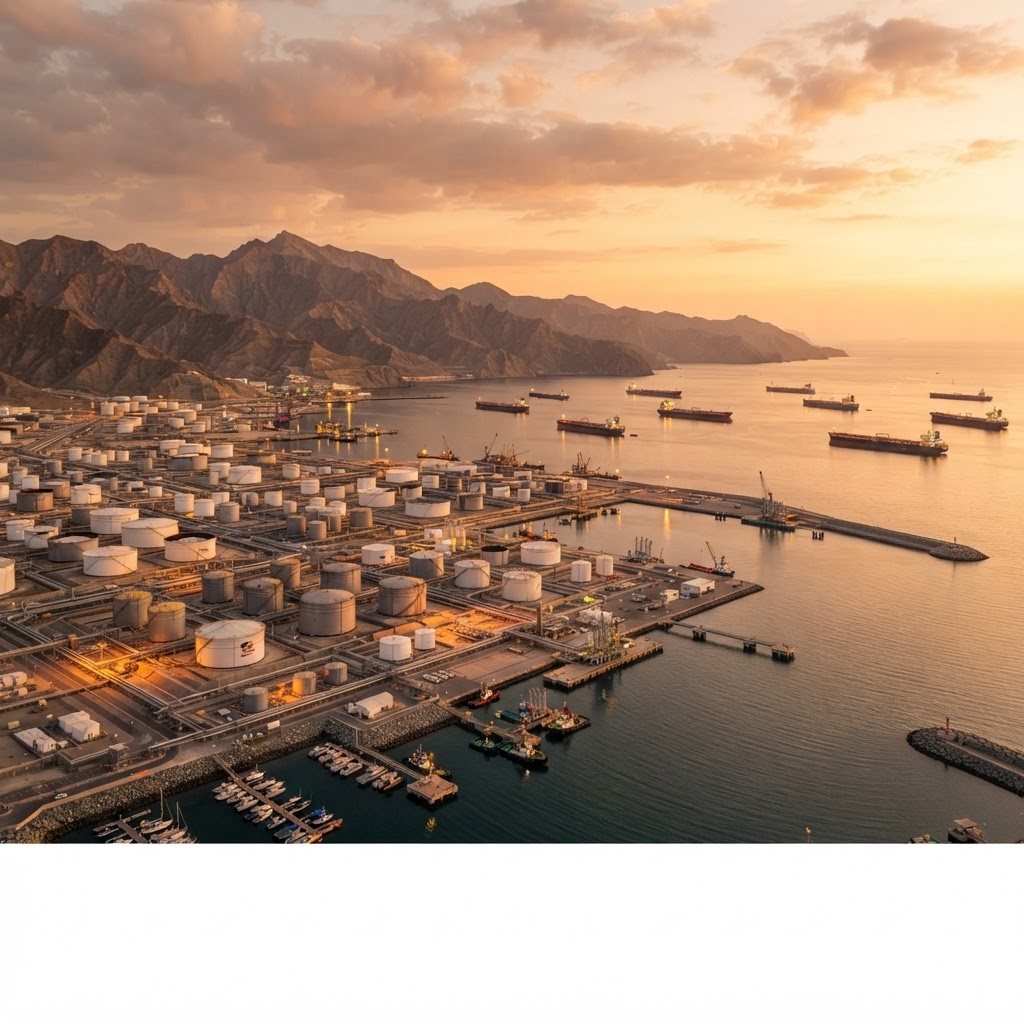
Fujairah bunkering port at golden hour
UAE · 25.18°N 56.34°E

Fujairah

Bunkering

The Middle East's busiest bunkering anchorage, and deliberately placed where geography does the work — outside the Strait of Hormuz, clear of choke-point congestion, with the Gulf of Oman open in every direction. This is where we run rapid ship-to-ship transfers and offshore bunkering for vessels that can't afford to divert into port, alongside short-cycle storage built for speed rather than volume. Fujairah keeps East-bound crude moving on tight schedules toward the Indian Ocean, and its position makes it the terminal our masters trust most when a voyage plan changes at short notice.

Storage Capacity1.9M m³
Berthing Depth20.0 m
MandateBunkering hub
StatusOperational
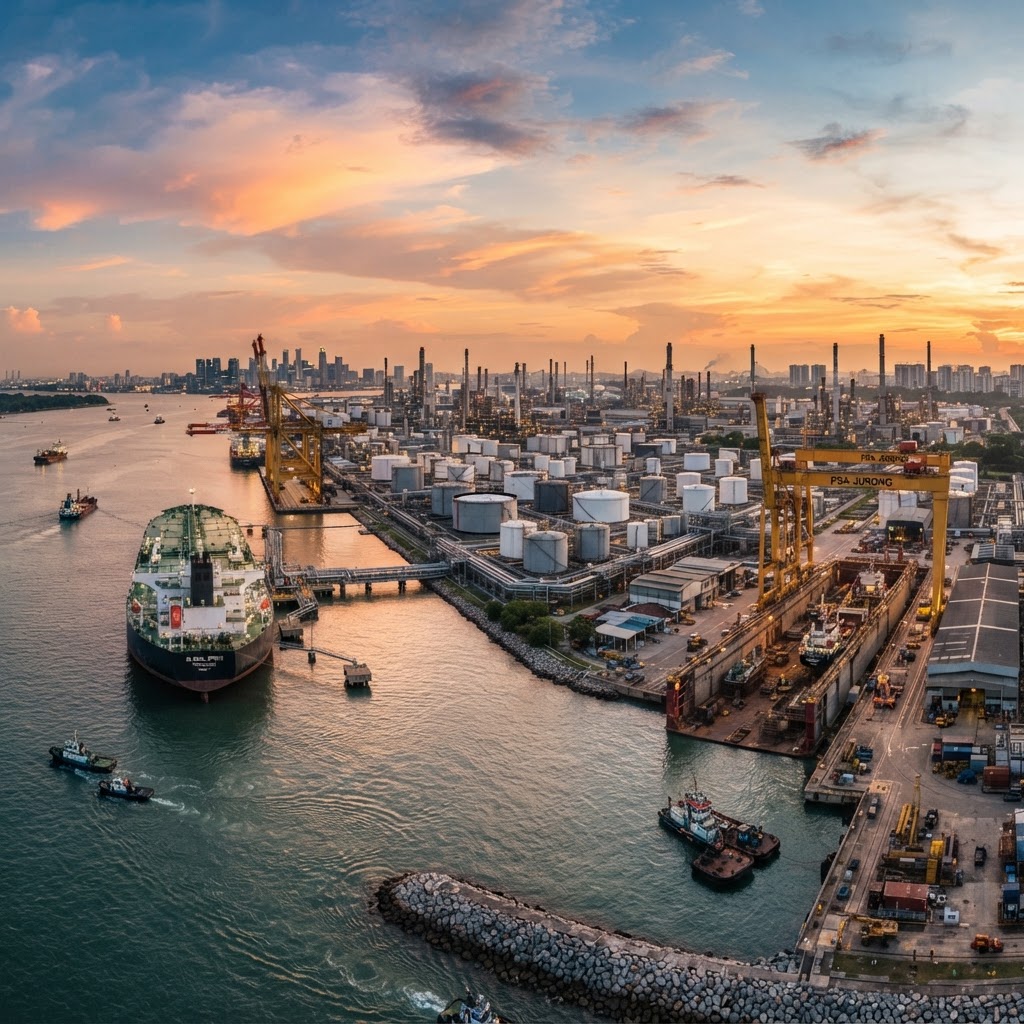
Jurong Singapore oil terminal at sunset
Singapore · 1.29°N 103.79°E

Jurong

Asia Gateway

Our gateway into Asia, and the terminal that closes the loop on cross-continent distribution. Jurong sits inside Singapore's refining and storage network — among the deepest and best-connected in the world — giving us fast access to blending facilities, bonded storage, and a shipping community that never really sleeps. Deep-water berthing here takes the largest tankers we operate, and the Strait of Singapore puts every major Pacific and Indian Ocean route within easy reach. From Jurong, product moves on to China, Japan, Korea and the wider Asia-Pacific — turning Atlantic and Middle East supply into an Asian delivery.

Storage Capacity2.1M m³
Berthing Depth18.5 m
MandateAsia distribution
StatusOperational
Port of Hong Kong oil terminal
China · 22.20°N 114°.05′16 E

Hong Kong

China · Port

Hong Kong is Asia’s southern energy hub, anchoring our network at the mouth of the Pearl River Delta. Its deep‑water terminals handle Aframax and VLCC arrivals, with tank farms positioned to serve China’s refining belt and regional petrochemical demand. From here, crude and refined products flow seamlessly into mainland pipelines or hold in storage, giving us vital flexibility across East Asia.

Storage Capacity4.7M m³
Berthing Depth26.2 m
MandateEast Asia distribution
StatusOperational
Global Map

Five Hubs, One Artery

From the North Sea to the Gulf of Mexico, the Arabian Sea to the South China Sea — trace the route below: four terminals forming one continuous artery for the world's energy.

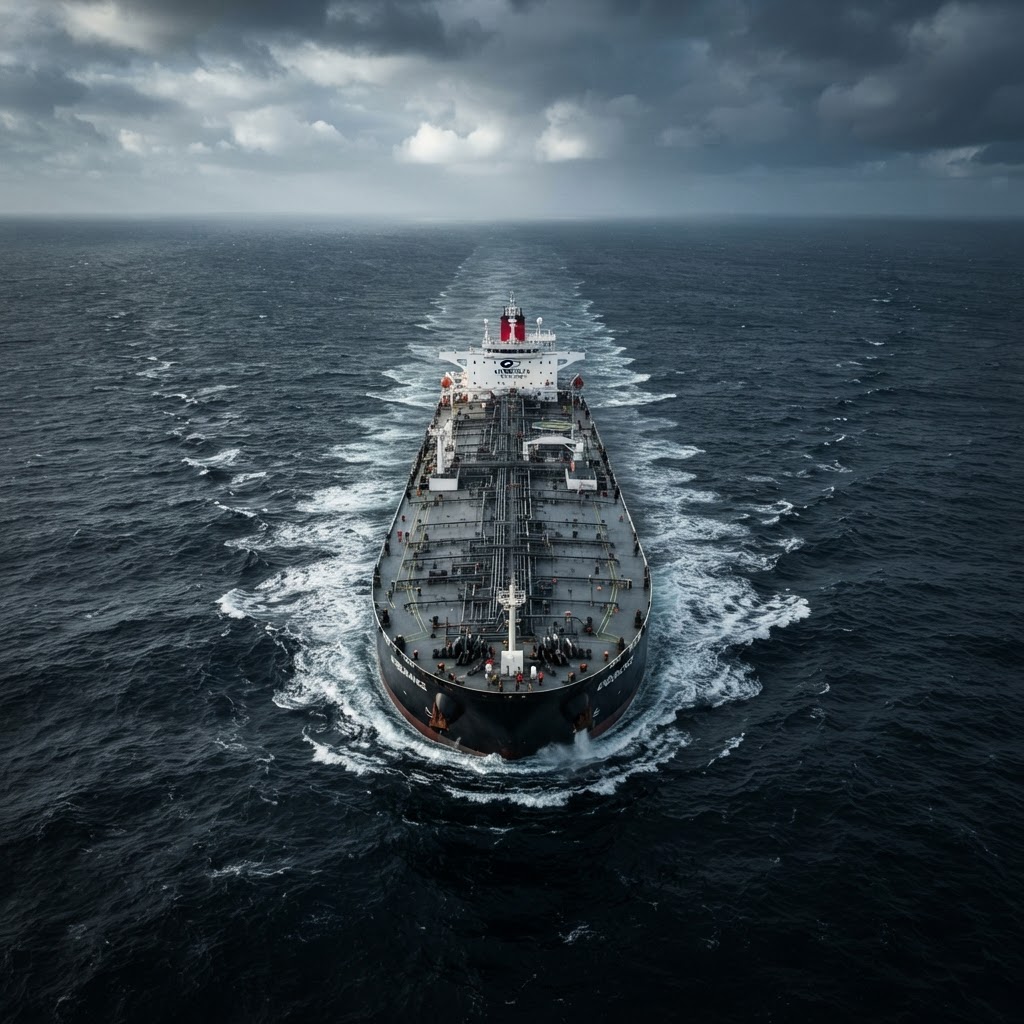
Crude oil tanker at sea
Houston 29.76°N 95.37°W Storage 2.8M m³
Hong Kong 22.20°N 114°.05′16 E Storage 4.7M m³
Rotterdam 51.92°N 4.47°E Storage 3.2M m³
Fujairah 25.18°N 56.34°E Storage 1.9M m³
Jurong 1.29°N 103.79°E Storage 2.1M m³

Strategic Access Starts Here.

Our terminal network is your competitive advantage. Let's route your cargo through the right hub.

Speak to an Advisor